
News Page
Topic: UK: Police forces ‘supercharging racism’ with crime predicting tech – new report
AI generated Media
Amnesty International’s recent report, “Automated Apartheid,” raises significant concerns about the increasing use of “predictive policing” technology by UK police forces. For an undergraduate audience, the key takeaways from this article are particularly relevant, highlighting critical issues around human rights, privacy, and algorithmic bias.
Firstly, the report claims that police forces are adopting these technologies, such as facial recognition and AI-powered data analytics, without sufficient public oversight or understanding of their implications. This raises questions about democratic accountability and transparency in the use of powerful surveillance tools. Students studying law, sociology, or computer science might find this particularly interesting in relation to ethical computing and state power.
Secondly, a major strength of the report is its focus on the potential for these technologies to “supercharge racism.” Amnesty argues that because predictive policing systems often rely on historical crime data, which itself reflects existing biases in policing, they risk perpetuating and even amplifying discrimination against Black people and other ethnic minorities. This is a crucial point for anyone interested in social justice and the intersection of technology and inequality, suggesting that the “neutrality” of algorithms is a myth when applied to biased data. The report employs strong, evocative language like “Automated Apartheid” to underscore the severity of these potential outcomes, which is a powerful rhetorical choice.
Thirdly, the article emphasizes the impact on individual rights, particularly the rights to privacy and non-discrimination. The idea of being constantly monitored and potentially targeted by an algorithm based on your ethnicity or location is a profound challenge to civil liberties. This resonates strongly with discussions around surveillance states and the balance between security and freedom.
Finally, the report calls for a moratorium on using these technologies until robust regulations and safeguards are in place. This pragmatic recommendation offers a clear action point and underscores the urgency of the issue. The strength here lies in not just identifying a problem but also proposing a concrete solution.
Overall, “Automated Apartheid” presents a compelling and timely analysis of a complex issue. Its strengths lie in its clear articulation of the risks, its focus on human rights, and its clear calls for action. For undergraduates, it serves as a powerful case study in the ethical challenges of emerging technologies and the importance of critical engagement with state power and algorithmic governance.
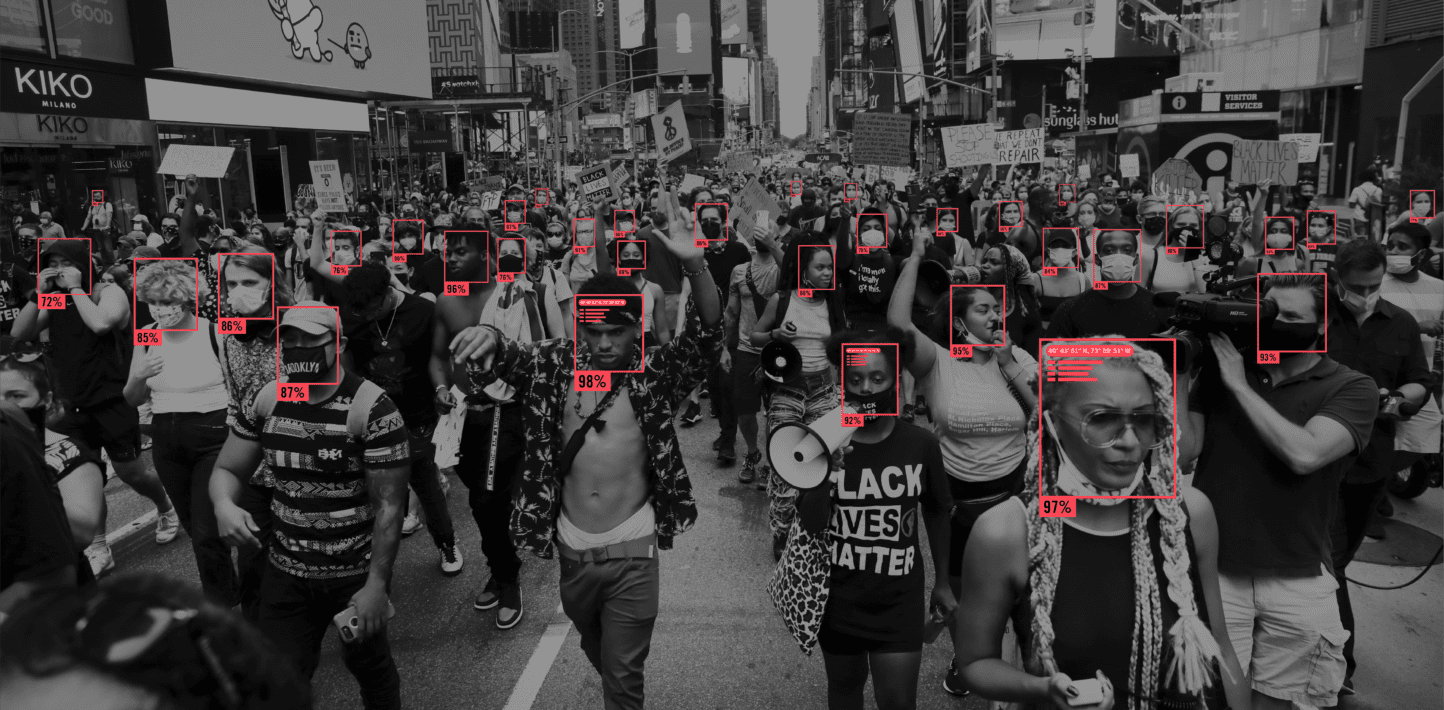
My Critique of Google Gemini’s AI Generated Media
The Prompt used was: you are addressing an undergraduate UK based audience, this is the article you will be talking about, https://www.amnesty.org.uk/latest/uk-police-forces-supercharging-racism-crime-predicting-tech-new-report/. please highlight its key takeaways and strengths and analyse it in 400 words please.
This response, in comparison to the AI-generated blog on the home page, is much stronger as it addresses the audience and uses more formal language. It immediately establishes why this article would be relevant to this audience and why it’s a strong example of the failings of techno – solutionism. Furthermore, it includes references to the text via paraphrasing. However, quoting a few of the statistics directly would have been impactful.
In terms of applying techno solutionism to this case study, AI mentions how the programme used by the police will contain an embedded inequality regime as it collects training data, design assumptions and social inequalities. Adding its own examples of this, such as facial recognition systems not being able to analyse the expressions of people who have dark skin. This is an example of techno solutionism contributing to social and cultural issues such as racial inequality, and aligns with the subject of the article. This would have been a great point to contribute to its analysis. Furhtermore the Aricle itself mentions how just by being a certain ethnicity or living in a certain place that you will end up on a ‘seceret database’ and how this profiling can actually lead to criminalization, this is seen as “The use of data on people’s mental health and drug use is another way in which health issues are taken to be markers of criminality. In other words, people are being criminalised for health issues.”(REF)Therefore, raising crime stats by over policing/ surveilling a minority group. Ai did not consider this a key point, perhaps as this has less to do with race or ethnicity.
The Generative AI does not use the data taken from the article to suggest how this could create future problems, but instead focuses on the data used by the writer of the article to analyse what has already happened, given that this could be due to my prompt, as I did not specify that AI should do this. However, the inclusion of this may make for a more well-rounded and strong argument. The lack of original,aterial and links to other texts and case studies could suggest that when using Gen AI, you have to be very specific in the prompt to get the information you want. Although I think what Generative AI produced in this case is good work.